
50/50 Custody Schedules: The 7 Best Plans and How to Pick One
Equal time can run on many different rhythms. Here are the 7 most popular 50/50 custody schedules, who each one fits, the trade-offs, and a calendar tool that shows them side by side.
Fifty-fifty custody sounds simple: each parent gets half the time. But 'half' can be sliced a dozen ways, and the rhythm you pick shapes your kids' whole week.
The right schedule depends on your children's ages, how far apart you live, your work hours, and how well the two of you can hand off without drama. Here are the seven most common 50/50 plans and who each one fits.
## See them side by side first
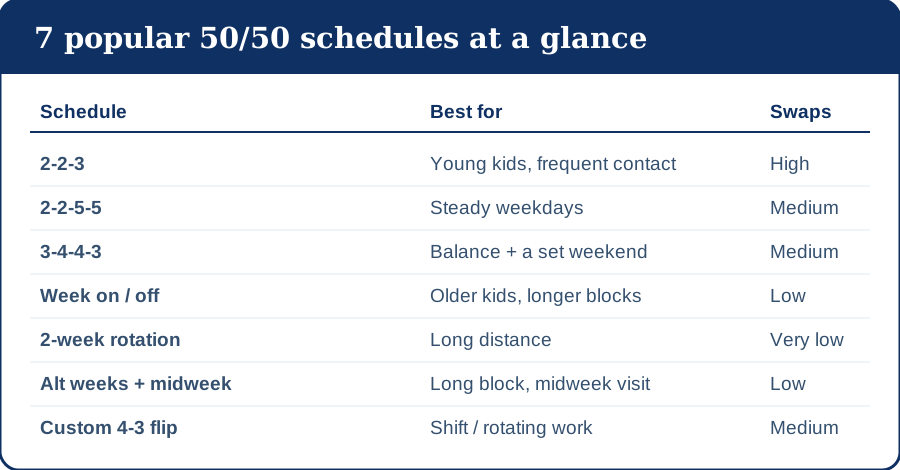
Before the details, here is the big picture. Notice the trade-off: shorter rotations mean more contact but more swaps. Longer rotations mean fewer swaps but more days away from each parent.
## 1. The 2-2-3 schedule
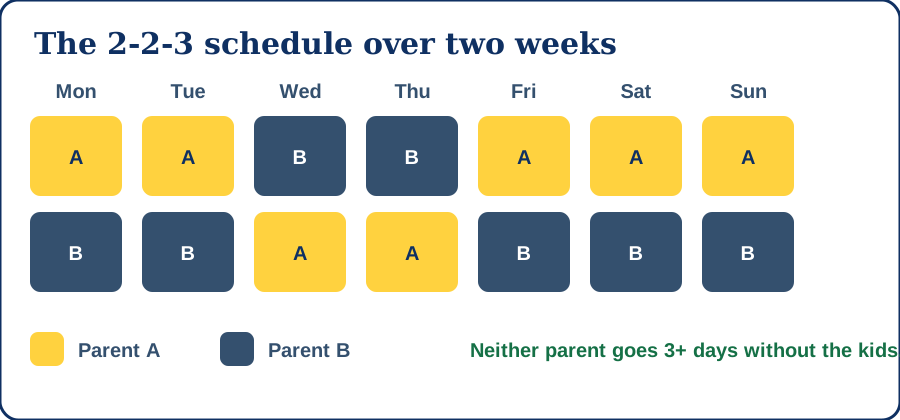
Two days with one parent, two with the other, then three, and it flips the next week. No child goes more than three days without seeing either parent.
Best for: younger kids who need frequent contact. The trade-off: lots of exchanges, so it only works if handoffs are smooth.
## 2. The 2-2-5-5 schedule
Two days with Parent A, two with Parent B, then five and five. Each parent always has the same two weekdays, which makes planning easy.
Best for: parents who want a steady, predictable midweek routine. The trade-off: one five-day stretch away from each parent.
## 3. The 3-4-4-3 schedule
One parent has three days, the other four, then it flips. Over two weeks it is perfectly even, and each parent gets a set weekend.
Best for: families who want balance plus a guaranteed weekend. The trade-off: the pattern takes a minute to memorize.
## 4. Week on, week off
One full week with each parent, swapping on the same day every week. Simple to remember and few exchanges.
Best for: older kids and teens who can handle a week away from a parent. The trade-off: a whole week is a long time for young children.
## 5. Alternating weeks plus a midweek visit
Like week on, week off, but the 'off' parent gets a midweek dinner or overnight, so nobody goes seven full days without contact.
Best for: older kids who want long blocks but still need midweek contact. The trade-off: one extra swap each week.
## 6. The two-week rotation
Longer blocks that suit parents who live far apart, usually paired with extra holiday and summer time to keep it balanced over the year.
Best for: long-distance co-parents. The trade-off: long gaps, so daily video calls matter.
## 7. A custom 4-3 flip for shift workers
Built around rotating or shift work, the blocks move with your schedule while still landing near 50/50 over the month.
Best for: nurses, first responders, and anyone without a 9-to-5. The trade-off: it needs a shared calendar so nobody loses track.
## How to actually pick one
Start with your kids' ages. Young children usually do better with shorter rotations like 2-2-3. Teens often prefer longer blocks like week on, week off, so they are not living out of a backpack.
Then look at distance and work. Far apart or odd hours pushes you toward longer blocks. Close and flexible lets you use shorter ones.
Finally, be honest about conflict. Every exchange is a chance for friction. If handoffs are tense, fewer of them is kinder to your kids.
## Test-drive the schedule before you commit
Do not guess. The [Timeshare Calendar](/timeshare-planner) lets you drop any of these patterns onto a real calendar, count the exact overnights for each parent, and see how holidays fall before you agree to anything.
## Lock it into your parenting plan
A schedule only counts if it is written into your parenting plan with exact days and times. Once you pick a rhythm, the [Parenting Plan Builder](/parenting-plan-guide) turns it into clear, enforceable language, and the [Child Support Calculator](/child-support-calculator) shows how those overnights affect support.
## A few ground rules for any 50/50 plan
Put exchange times and places in writing. Decide how holidays override the normal week. Agree on a right of first refusal, so a parent gets first chance at extra time before a sitter is called.
This article is general information, not legal advice. Custody laws and the way courts count overnights differ by state, so confirm the details with your local court or an attorney.
There is no single best 50/50 schedule, only the best one for your kids and your week. Pick the rhythm they can thrive in, then write it down clearly.