
What to Bring to Family Court: The Evidence Checklist That Wins
Cases are won by organized proof, not by who is angrier. Here are the 8 types of evidence judges expect, what gets thrown out, and how to build a clean exhibit binder that backs up every claim you make.
Family court is not won by the parent who is most upset. It is won by the parent who can prove what they are saying. Calm, dated, organized proof beats emotion every time.
The good news: you do not need a law degree to build strong evidence. You need to know what counts, what gets thrown out, and how to organize it so a judge can follow along.
## The 8 types of evidence judges expect
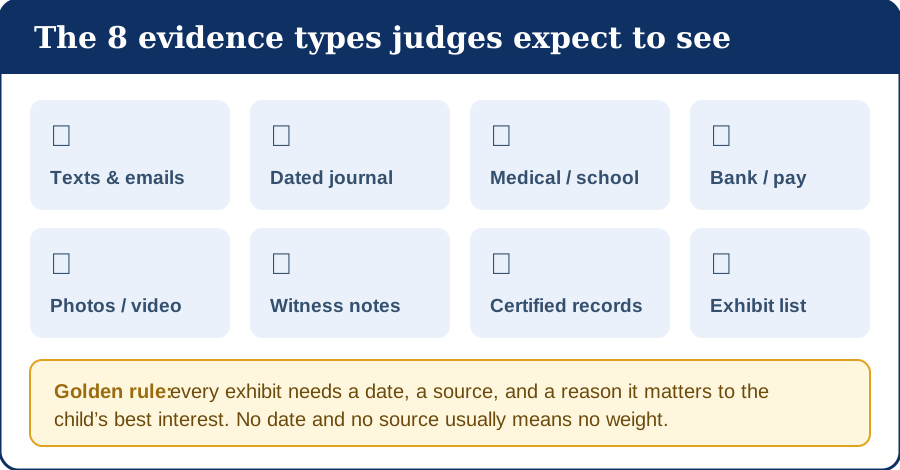
Strong cases pull from several of these, not just one. A single screenshot proves little. A pattern across messages, records, and dated notes proves a lot.
### 1. Texts and emails
Save full threads, not single lines. Context matters, and a judge is suspicious of a message with the lead-up cut off.
### 2. A dated journal
A running log of events, written close to when they happened, is powerful, because it shows a pattern over time. The [Court-Grade Journal](/journal) time-stamps every entry, so it is hard to argue you wrote it all the night before court.
### 3. Medical and school records
Official records from doctors, therapists, and schools carry real weight, because they come from neutral sources.
### 4. Financial records
Pay stubs, bank statements, and bills back up anything about money, support, or expenses.
### 5. Photos and video
Useful when they are dated and you can explain when, where, and why each one was taken.
### 6. Witness information
Names and contact details for people who saw what happened. A neutral teacher or coach is worth more than a relative.
### 7. Certified official documents
Court orders, police reports, and the like, in their official certified form.
### 8. A clean exhibit list
A simple index that numbers each piece of evidence and says what it proves. This alone makes you look prepared.
## What gets in, and what gets thrown out
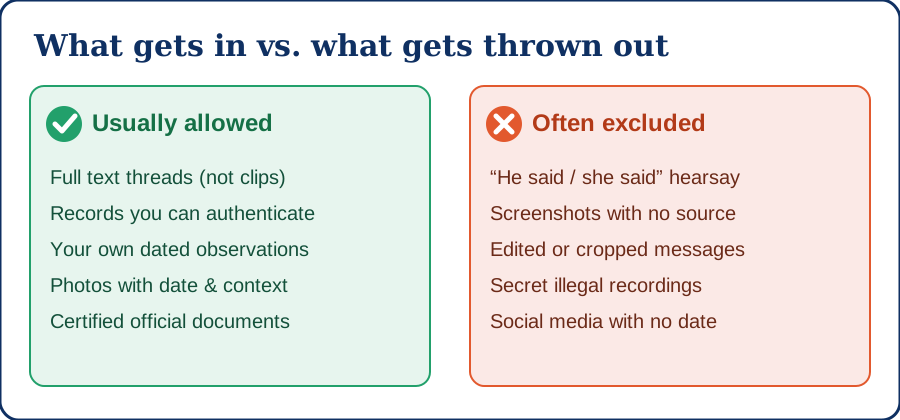
Not everything you want to show will be allowed. The most common reason evidence is excluded is hearsay, which is roughly using someone's out-of-court statement to prove it was true. Another is evidence you cannot authenticate, meaning you cannot show where it came from.
Edited or cropped messages, screenshots with no source, anonymous posts, and secret recordings made where they are illegal all tend to get tossed. When in doubt, keep the original, full, dated version of everything.
## How to organize it so it actually helps
Evidence that is true but messy still loses. Judges have minutes, not hours, so make it easy on them.
Number every exhibit. For each one, write a single line: what it is, the date, and what it proves. Put them in order. Bring at least three copies, one for the judge, one for the other side, and one for you.
A simple folder system does this for you. Keep each item with its date and source, and build the numbered exhibit list a judge expects.
## Show the pattern, not just the moment
One bad day proves nothing. A pattern across weeks or months proves a lot. If your concern is missed exchanges, late pickups, or broken promises, line them up by date so the pattern is impossible to miss. The [Behavior Pattern Builder](/portals/pattern-evidence) is built for exactly this.
## Tie every exhibit to the child
In custody matters, the judge cares about one thing: the best interest of the child. Before you include a piece of evidence, ask, 'does this show something about the child's safety, stability, or needs?' If it is really just about your anger at the other parent, leave it out. It can hurt you.
## A pre-court evidence checklist
Full message threads saved, not clips. Records gathered from neutral sources. Journal entries dated and printed. Exhibits numbered with a one-line description each. Three copies of everything. A short outline of what each exhibit proves.
## Bring it together
Start a [Court-Grade Journal](/journal) today, gather your records into one folder, and turn your raw proof into a numbered exhibit list before your hearing.
This article is general information, not legal advice, and the rules of evidence vary by state. Your local court's self-help center or an attorney can tell you what your courtroom will and will not allow.
Organized proof is quiet confidence. It lets the facts do the arguing for you.