
How to File for Divorce Without a Lawyer: Step-by-Step (2026)
Filing for divorce on your own is doable when you know the order of steps. Here is the full pro se roadmap: residency, the petition, serving your spouse, financial disclosure, and final judgment, plus the tools that do the paperwork with you.
Thousands of people end a marriage every year without hiring a lawyer. It is called filing pro se, and for a simple, agreed divorce it can save you thousands of dollars.
The trick is knowing the order of steps and not skipping any. Courts are strict about sequence and paperwork. Miss a form or a deadline and your case stalls.
This is the full roadmap, in plain language, from your first form to the judge's signature.
## First, is your divorce contested or not?
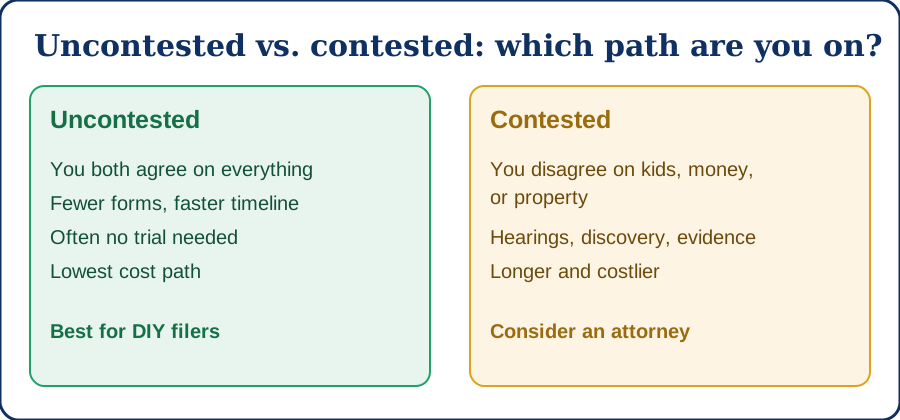
An uncontested divorce means you and your spouse agree on everything: the kids, the money, and the property. This is the path most do-it-yourself filers can finish on their own.
A contested divorce means you disagree on at least one big thing. You can still represent yourself, but the road is longer, and it is worth at least one paid hour of advice. You can compare local options in the [Attorney Directory](/attorney-directory).
Be honest about which one you have before you start. It changes how much work is ahead.
## The step-by-step roadmap
### Step 1: Meet the residency rule
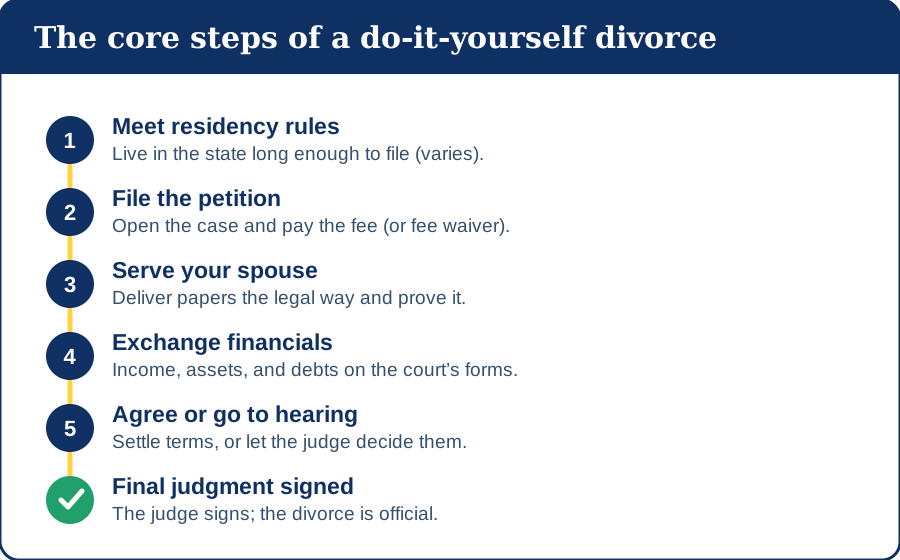
Every state makes you live there for a set time before you can file, often three to twelve months. If you just moved, you may have to wait. Check your state's rule first, because filing too early gets your case tossed. You can look up your [local family court](/locations) to confirm how long you must live there before filing.
### Step 2: Fill out and file the petition
The petition, sometimes called a complaint, is the form that opens your case. It names both spouses and the children and says what you are asking for. You file it with the clerk and pay a filing fee. If money is tight, ask the clerk about a fee waiver.
The [State Forms](/state-forms) library and [Find Forms](/find-forms) help you locate the right starting forms for your county, and the [Court Document Generator](/portals/document-generator) helps you fill them out cleanly.
### Step 3: Serve your spouse
You must legally deliver the papers to your spouse and prove it to the court. This is called service. You usually cannot hand them over yourself. Common ways are the sheriff, a process server, or certified mail, depending on your state.
Service is where many self-filers slip. Do it the exact way your court allows, and file the proof-of-service form afterward.
### Step 4: Exchange financial information
Most states make both spouses share a full financial picture: income, assets, debts, and monthly expenses. This is called financial disclosure. Be complete and honest, because hiding money can blow up your whole case.
Pulling your numbers together early makes this painless. The [Expense Tracker](/expense-tracker) logs income and shared costs with proof, so your financial records stay organized.
### Step 5: Settle the terms, or go to a hearing
If you agree on everything, you write it into a settlement agreement and a parenting plan, then submit them. If you cannot agree, the court sets a hearing and the judge decides the open questions.
Need a parenting plan? The [Parenting Plan Builder](/parenting-plan-guide) creates a court-ready one, and the [Child Support Calculator](/child-support-calculator) gives you a realistic support number to put in the agreement.
### Step 6: Get the final judgment signed
Once the paperwork is complete and any waiting period has passed, the judge signs the final judgment. That document is what makes you officially divorced. Keep certified copies.
## How long does it take?
Even a friendly, agreed divorce usually takes a few months, because most states build in a waiting period. A contested case can take a year or more. Plan for the wait so it does not catch you off guard.
## The mistakes that stall pro se divorces
Using the wrong county's forms. Filing the petition but botching service. Leaving the financial disclosure half-finished. Missing a hearing date. Writing a vague settlement the judge sends back.
Almost all of these come from missing a step or rushing the paperwork. Slow down, keep a checklist, and track your deadlines. The [Case Planner](/portals/case-planner) turns this whole roadmap into dated tasks so nothing slips.
## When to call a lawyer anyway
Some situations are worth at least one paid hour of advice: a spouse who hides money, any history of abuse, a business you built together, large retirement accounts, or a custody fight. You can still do most of the work yourself and use a lawyer only for the hard parts.
## Where to start today
Confirm your residency, find your county's forms in [State Forms](/state-forms), and open the [Divorce](/divorce) guide to walk through your state's process step by step. You can also pick your state in the [family law directory](/family-law) to see the local rules where you live.
This article is general information, not legal advice. Divorce rules and forms vary by state and county, so always confirm the details with your local court or self-help center.
Done in the right order, a do-it-yourself divorce is a series of small, clear steps, not one giant scary leap.