
How Child Support Is Really Calculated in 2026 (Every State)
Child support is not a guess or a judge's mood. It is a formula built on income, overnights, and a few key costs. Here is exactly how the math works, what raises or lowers the number, and how to estimate yours in minutes.
Child support is one of the most misunderstood numbers in family court. People think the judge picks it based on mood. The truth is calmer: it is mostly a formula.
Once you understand the formula, the number stops being scary. You can estimate it yourself, check the other side's math, and walk into court knowing what to expect.
## The three models states use
Most states use one of three systems. The 'income shares' model, used by the large majority of states, adds both parents' incomes and splits the cost by share. The 'percentage of income' model bases it mainly on the paying parent's income. A few states use the 'Melson formula,' a more detailed version of income shares.
This guide focuses on income shares, because it covers most of the country. The exact tables differ by state, but the shape of the math is the same almost everywhere. You can check the rules for your own state, such as [California](/family-law/california), [Texas](/family-law/texas), or [Florida](/family-law/florida).
## The formula, step by step
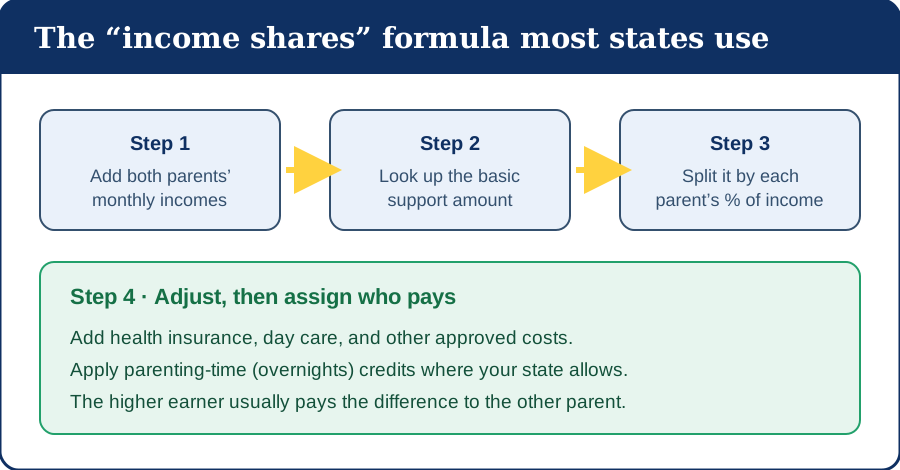
### Step 1: Add both incomes
You start with each parent's gross monthly income, then combine them. Gross usually means before taxes, and it can include wages, bonuses, self-employment, and sometimes overtime.
### Step 2: Find the basic support amount
Your state has a chart that says, for a given combined income and number of kids, what it costs to raise those children. You look your number up on that chart.
### Step 3: Split it by income share
Each parent covers their slice of that cost, based on their share of the combined income. If you earn 60 percent of the total, you cover 60 percent of the basic amount.
### Step 4: Add costs and apply credits
Then you add approved extras like health insurance and day care, and apply parenting-time credits for overnights. The higher earner usually pays the difference to the other parent.
## What actually counts as income
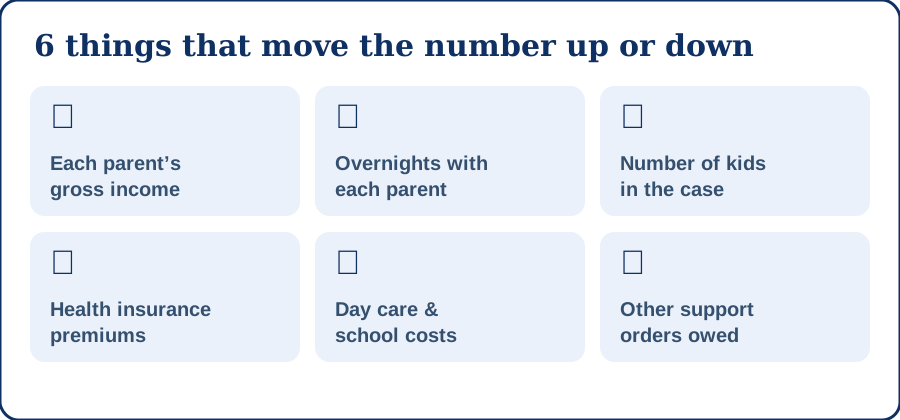
Income is broader than your paycheck. It often includes wages, tips, commissions, bonuses, self-employment profit, unemployment, and sometimes rental or investment income. Some states add overtime; some do not.
If a parent quit a good job or is working below their ability on purpose, a judge can use 'imputed income,' meaning support is figured on what that parent could earn, not what they choose to earn.
## How overnights change the number
In most income-shares states, the more overnights you have, the more your support obligation drops, because you are already paying for the child while they are with you. This is why the parenting schedule and the support number are tied together.
That link is also why the same income can produce very different support numbers depending on the schedule. Map your overnights first with the [Timeshare Calendar](/timeshare-planner), then run the support math.
## Estimate yours in minutes
You do not need to do this by hand. The [Child Support Calculator](/child-support-calculator) uses your state's formula, your incomes, the overnights, and the main costs to give you a realistic estimate before you ever file.
Keep your numbers organized while you gather them. The [Expense Tracker](/expense-tracker) logs income and shared child costs with proof, which is exactly what you will need for the financial disclosure.
## The documents you will need to prove your numbers
Courts do not take your word for your income. Expect to show recent pay stubs, last year's tax return, and proof of costs like the health insurance premium and day care bills. Gather these into one folder so you are ready when the court asks.
## Can the number change later?
Yes. If income changes a lot, the schedule changes, or a child's needs change, either parent can ask the court to modify support. You usually need a real, lasting change, not a small or temporary one. The [Court Document Generator](/portals/document-generator) can help you draft the motion.
## Common myths, cleared up
Myth: quitting your job lowers your support. Reality: a judge can impute income. Myth: child support covers everything. Reality: extras like medical and activities are often split on top. Myth: if we share time 50/50, nobody pays. Reality: the higher earner usually still pays something.
## Bottom line
Child support is math, not magic. Learn the four steps, gather your proof, and estimate the number with the [Child Support Calculator](/child-support-calculator) so there are no surprises.
This is general information, not legal advice, and every state's tables and rules differ. Confirm the details with your state's child support guidelines or a local attorney.