
The Parenting Plan a Judge Will Actually Approve (2026)
A good parenting plan is specific, clear, and easy to enforce. Here are the 12 sections every plan needs, the vague wording that gets plans rejected, and how to build yours without starting from a blank page.
A parenting plan is the rulebook for raising your kids in two homes. When it is clear and specific, it keeps you out of court. When it is vague, it sends you right back.
Judges do not approve plans because they sound loving. They approve plans they can read, follow, and enforce if one parent stops cooperating. That is the whole game.
This guide breaks down the 12 sections every strong plan includes, the exact wording that gets plans rejected, and how to draft yours step by step.
## What a parenting plan actually is
A parenting plan, sometimes called a custody agreement or a time-sharing plan, is a written schedule and set of rules for your children. It covers where they sleep, who decides what, how you swap them, and what happens on holidays.
Most states require one before they will finalize custody. Even when it is not required, a detailed plan protects you, because a judge can only enforce what is written down.
Here is a simple test: if you and the other parent stopped speaking tomorrow, could a stranger read your plan and run your week without calling either of you? If yes, your plan is strong. If no, it has gaps.
## The 12 sections every plan needs
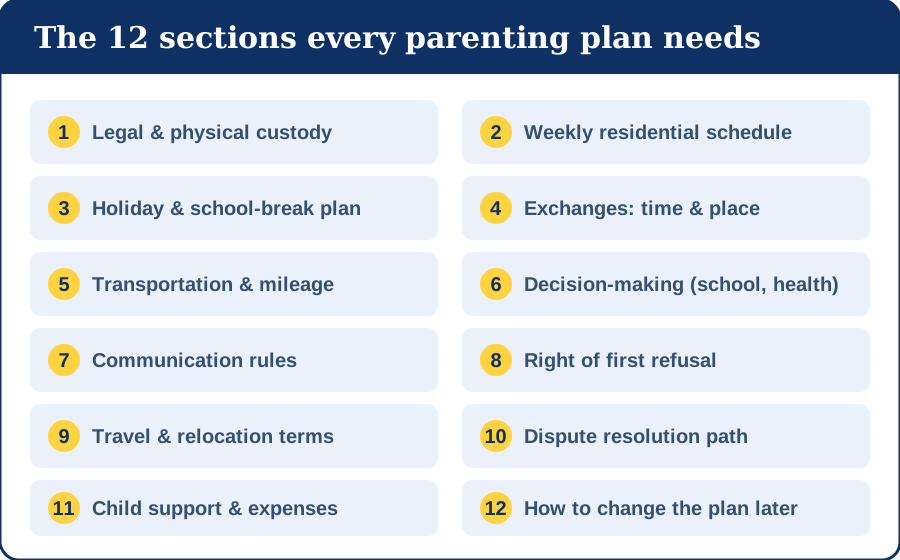
Here is what a complete plan covers. Missing sections are exactly where future fights start.
### 1. Legal and physical custody
Legal custody is who makes the big decisions, like school, doctors, and religion. Physical custody is where the child lives. Spell out both, and say whether each is joint or sole.
### 2. The weekly residential schedule
The day-by-day, overnight-by-overnight schedule. Name the parent, the day, and the exact start and end times. The phrase 'every other weekend' is not enough on its own.
### 3. Holidays and school breaks
List each holiday and who has the child in even years and odd years. Cover summer, winter break, spring break, and three-day weekends. Holidays should override the normal weekly schedule, and your plan should say so.
### 4. Exchanges: time and place
Where you hand the child off, what time, and who does the driving. A neutral spot like the school or a public lot lowers conflict.
### 5. Transportation
Who drives to and from each exchange, and who pays for travel if you live far apart.
### 6. Decision-making
How you make big choices together, and what happens when you disagree. Many plans give one parent the final say in a single area, like medical care, to break ties.
### 7. Communication
How you and the other parent talk, whether by app, email, or text, how fast you reply, and how the child reaches the other parent during each home's time.
### 8. Right of first refusal
If a parent needs a sitter for more than a set number of hours, the other parent gets first chance to take the child instead. Set the hour limit clearly.
### 9. Travel and relocation
Notice rules for out-of-state trips, passports, and what happens if one parent wants to move. This section heads off some of the ugliest disputes.
### 10. Dispute resolution
The step you take before running to court, usually mediation. Judges like to see this written in.
### 11. Child support and expenses
How support is paid and how you split extras like medical bills, day care, and activities. You can estimate the support number with the [Child Support Calculator](/child-support-calculator) before you finalize anything.
### 12. How to change the plan later
Kids grow and life changes. Say how the two of you can update the plan by agreement, without a court fight.
## The wording that gets plans rejected
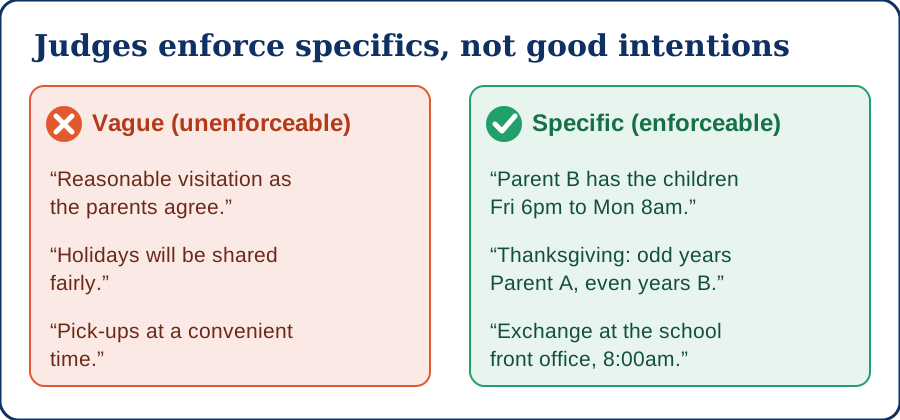
The single biggest reason plans fail is vague language. Words like 'reasonable,' 'as agreed,' 'fair,' and 'flexible' sound nice but cannot be enforced. If you and the other parent disagree later, a vague plan gives a judge nothing to act on.
Trade soft words for hard facts. Instead of 'reasonable weekend visits,' write 'Parent B has the children from Friday 6:00 pm to Sunday 6:00 pm.' Instead of 'share holidays fairly,' name the holiday, the year, and the parent.
Specific is not unfriendly. It is a gift to your future self, because it ends the argument before it starts.
## How to build the weekly schedule
Start with how much time each parent gets, then pick a pattern that fits the kids' ages and your work. Younger children often do better with shorter, more frequent swaps. Older kids can handle longer blocks like week on, week off.
Write the schedule as a repeating pattern so anyone can follow it. To see different patterns side by side and count the overnights, the [Timeshare Calendar](/timeshare-planner) lays them out visually and tracks every exchange.
## Holidays beat the weekly schedule
Your plan should state that holiday time overrides the normal week. Otherwise you get fights when a holiday lands during the other parent's regular days. List each holiday, the hours, and which parent has it in even and odd years.
## Do not start from a blank page
A blank document is where good intentions go to die. The [Parenting Plan Builder](/parenting-plan-guide) walks you through every section above, asks the right questions, and produces a clean, court-ready document you can file or bring to mediation.
If you are still sorting out the big picture, the [Case Planner](/portals/case-planner) helps you map deadlines and next steps, and [Mediation Central](/portals/mediation-command-center) helps you prepare before you sit down with the other parent.
## Before you sign
Read the plan out loud as if you were the other parent hunting for a loophole. Every time you think 'well, that depends,' you found a gap. Fix it with a specific rule.
Check that times, dates, and names are exact. Check that holidays override the week. Check that you covered what happens when someone is late or wants to swap.
## A quick reality check
This guide is general information, not legal advice, and custody rules differ by state. A local attorney or your court's self-help center can confirm what your county requires. You can find counsel in the [Attorney Directory](/attorney-directory) or ask other parents in your state in the [Community](/community).
A strong parenting plan is boring to read and easy to follow. That is exactly what a judge wants to approve.